Devotion by Design: The Dark Art of Engineering a Fanbase That Can't Let Go
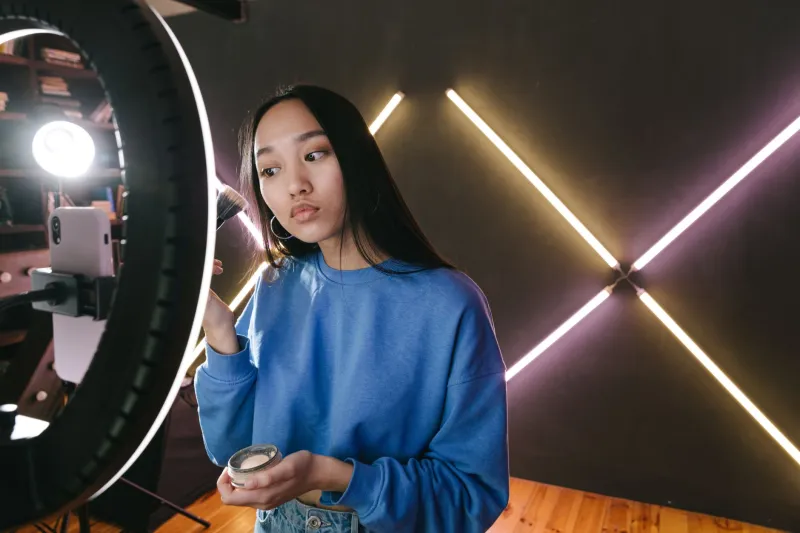
There's a particular kind of creator you've probably encountered. They feel impossibly real. They remember things — inside jokes, running bits, the names of fans they've mentioned once in a video three years ago. They cry on camera at the right moments. They share just enough chaos to seem relatable, just enough success to seem aspirational. And somehow, without ever meeting you, they make you feel seen.
That feeling isn't accidental. And for a growing number of creators who've studied the architecture of human attachment, it isn't even organic.
Welcome to the deliberately engineered parasocial relationship — one of the most psychologically sophisticated (and ethically murky) phenomena in modern entertainment culture.
What Parasocial Actually Means — And Why It's Been Weaponized
The term "parasocial" was coined in 1956 by sociologists Donald Horton and Richard Wohl to describe the one-sided emotional bonds audiences form with media figures. Back then, they were talking about TV personalities. Today, the concept has been quietly handed a scalpel and used with surgical precision by creators who understand that emotional investment translates directly into revenue, loyalty, and social leverage.
The baseline version of parasocial connection is benign — even kind of beautiful. You watch someone long enough, you start to care about them. That's just human. But what's emerged in the creator economy is something more intentional: a studied manipulation of the psychological mechanics behind intimacy, trust, and belonging.
Some creators aren't stumbling into deep audience connections. They're building them the way a contractor builds a house — with blueprints.
The Playbook (Whether They'll Admit It or Not)
The tactics aren't always conscious. Some creators absorb them intuitively from watching what works. Others are frighteningly deliberate. Either way, the patterns are consistent enough to map.
Manufactured vulnerability is usually the entry point. A creator shares something painful — a family estrangement, a mental health struggle, a financial rock-bottom moment. The audience leans in. Vulnerability signals safety, and safety signals trustworthiness. What the audience doesn't always clock is whether that vulnerability is being rationed strategically, released in doses timed to re-engagement dips or monetization pushes.
The illusion of exclusivity comes next. "I don't talk about this anywhere else." "You guys are the only ones who get it." "My Twitter followers don't even know about this." These phrases do something specific: they create an in-group. And once you believe you're in a special circle, leaving feels like a betrayal — not of the creator, but of the community itself.
Reciprocal language seals it. Creators who refer to their audience as "we," who ask for opinions and then visibly act on them, who thank specific fans by name during streams — they're not just being friendly. They're simulating the feedback loop of an actual relationship. Your brain, which evolved to track social bonds for survival, genuinely cannot always tell the difference.
When "Authentic" Becomes a Con
The uncomfortable truth is that authenticity itself has become a performance category. In a media landscape that rewards realness, the savviest operators have learned to perform realness better than anyone actually being real.
Consider the creator who built a following around mental health transparency, sharing breakdowns, therapy sessions, and recovery arcs with a consistency that felt almost too narrative. Fans rallied, donated, defended them online with a ferocity typically reserved for actual loved ones. When a former collaborator later described the calculated nature of what got posted — and what didn't — the audience reaction was split. Half were devastated. The other half refused to believe it, because accepting the manipulation meant accepting that the intimacy they'd felt was manufactured. And that's a loss people aren't always equipped to process.
That psychological resistance is part of what makes predatory parasocial dynamics so durable. The deeper the manufactured bond, the more the audience protects it.
The Cult Gradient
Most exploitative creator-audience relationships don't look like cults. They look like enthusiastic fandoms. The cult comparison only becomes useful when you look at the gradient: the incremental normalization of increasingly extreme devotion.
It starts with defending the creator in comment sections. Then it's donating money during "hard times" that somehow never quite resolve. Then it's cutting off friends who are "too negative" about someone you've never actually met. Then it's rearranging your real-world schedule around live streams. Then it's feeling genuine grief — not just disappointment, but grief — when the creator doesn't acknowledge you.
Each step feels small from inside it. From the outside, the trajectory is recognizable.
The warning signs audiences consistently miss: creators who position themselves as uniquely misunderstood by everyone except their core fans; creators who subtly discourage followers from consuming other content; creators who respond to criticism from fans with visible emotional pain, effectively training the audience to self-censor; and creators who cycle through public crises with suspicious regularity, each one drawing the audience closer just as engagement starts to drift.
The Platform Problem
None of this happens in a vacuum. Platforms like YouTube, Twitch, TikTok, and Patreon are structurally designed to reward exactly the kind of deep, sticky engagement that parasocial exploitation produces. Metrics that matter — watch time, return visits, subscriber retention, donation frequency — all benefit from audiences who feel personally connected to creators.
There's no algorithmic flag for "this person's audience is emotionally dependent in ways that might not be healthy." There's no friction built into a $500 "super chat" to a creator who just cried on stream. The infrastructure is neutral to harm in a way that effectively enables it.
What Audiences Can Actually Do
This isn't a call to stop enjoying creator content or to approach every YouTuber with forensic suspicion. Most creators are not running psychological operations on their viewers. But developing a kind of low-level media literacy around parasocial mechanics is genuinely useful.
Ask yourself: Does following this person make you feel better about your own life, or does it make you feel like your life only matters in relation to theirs? Do you feel defensive when someone criticizes them in a way that goes beyond normal fan loyalty? Have you spent money on their content in ways you can't quite rationally justify?
None of those things are automatically alarming. But they're worth sitting with.
The creator economy is one of the stranger social experiments the internet has produced — a system where individual humans become media brands, where intimacy is a product, and where the line between genuine connection and engineered devotion is thinner than most of us are comfortable admitting.
Some creators are navigating that reality with real integrity. Others have figured out that your need to belong is, if you're not paying attention, a door that opens from the outside.