Almost Real Is the Scariest Thing Online Right Now
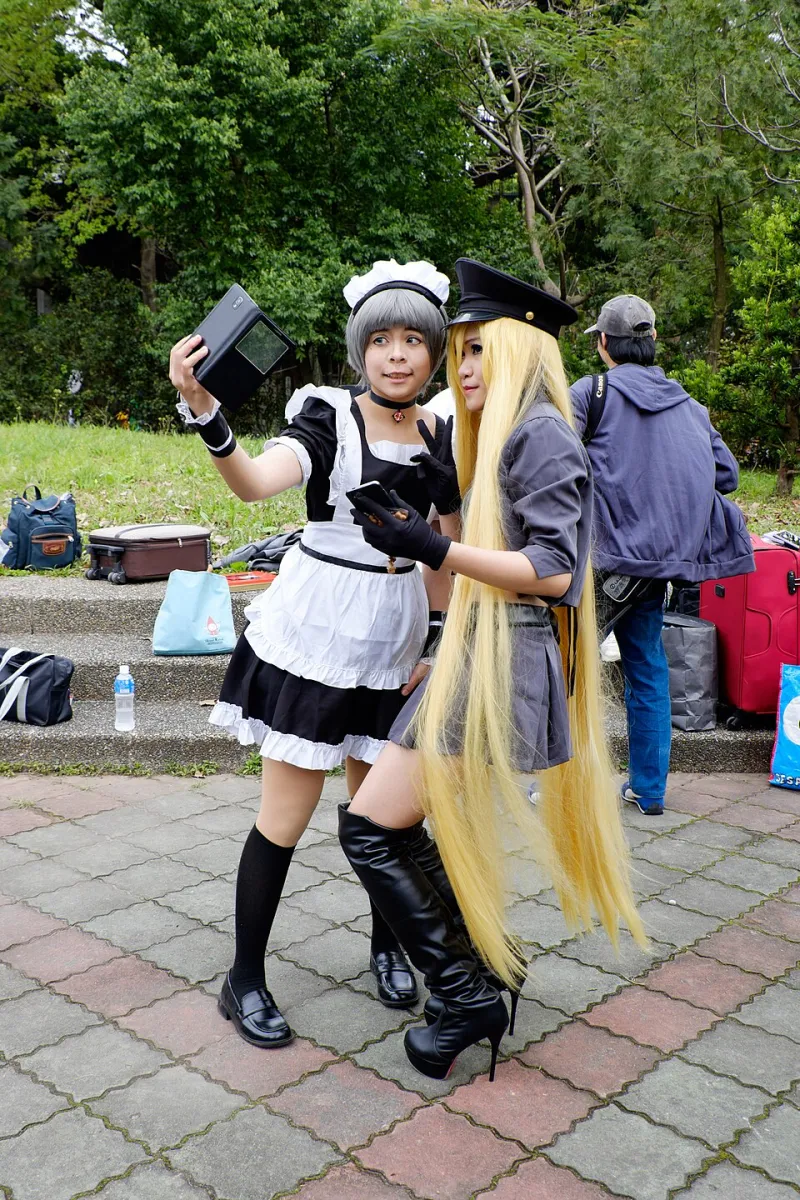
Photo: 玄史生, CC0, via Wikimedia Commons
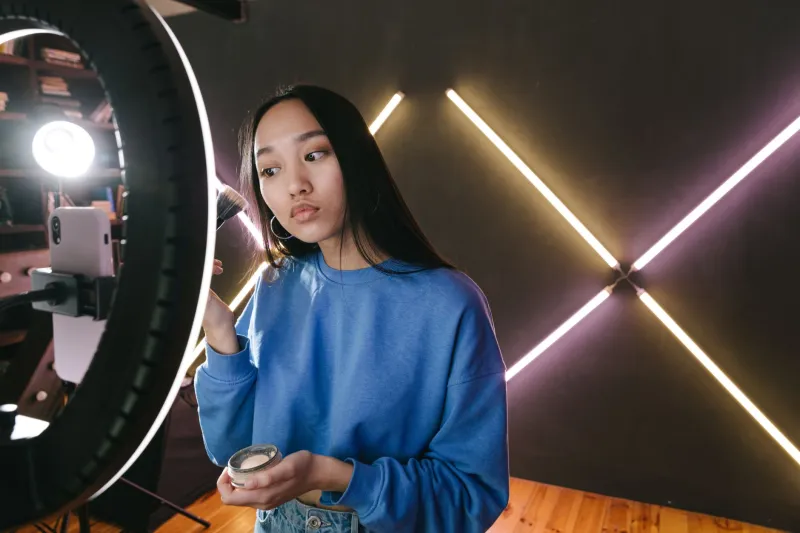
Something weird happens when you're deep in someone's content and you suddenly can't tell if they actually mean it. Not the obvious stuff — not the clearly scripted unboxings or the transparently sponsored lifestyle posts. Those are easy to clock and move on from. The unsettling thing is the creator who's almost authentic. The one who cries at the right moment, shares just enough personal detail to feel human, and somehow still leaves you feeling like you've been handled.
That feeling has a name — or at least a close cousin in neuroscience and robotics. And understanding it might explain why some of the most polished, "vulnerable" creators on the internet are quietly making their audiences deeply uncomfortable.
The Valley Between Real and Fake
In 1970, Japanese roboticist Masahiro Mori described what he called the uncanny valley — the unsettling dip in human comfort that occurs when something looks almost, but not quite, human. A cartoon character reads as friendly. A lifelike android reads as disturbing. Full human reads as normal again. The problem isn't the fake; it's the almost-real.
Apply that same curve to creator culture and something clicks into place. An obviously performative influencer — the one posting aspirational beach shots with product codes in the caption — is easy to process. You know what you're getting. On the other end, a creator who's genuinely messy, unfiltered, and inconsistently human feels trustworthy precisely because they don't seem to be managing your perception. But in the middle? That's where it gets strange.
Strategic vulnerability lives in the valley. It looks like authenticity. It hits the same emotional notes. But something in the back of your brain is sending up a quiet signal: this doesn't add up.
Why Your Brain Notices Before You Do
Neuroscientists studying social cognition have found that humans are exceptionally sensitive to what researchers sometimes call "intentionality cues" — the tiny signals that tell us whether someone's behavior is spontaneous or calculated. We read microexpressions, pacing, vocal hesitation, and emotional consistency at a processing speed that's faster than conscious thought.
When a creator's emotional performance is almost right but not quite — when the tears come too conveniently, when the "breakdown" is well-lit, when the apology video hits every beat of a familiar script — your brain's social detection system flags it before your rational mind catches up. You feel vaguely unsettled without being able to explain why. You keep watching, but something itches.
This is different from simply recognizing that someone is performing. Actors perform, and we enjoy it. The difference is context and contract. When you sit down to watch a film, you've agreed to the fiction. When a creator builds a relationship with you on the premise of realness, then delivers something engineered to feel real, the contract breaks — and the discomfort that follows is your nervous system registering a kind of social betrayal.
Deepfakes Made It Weirder
The rise of deepfake technology has added a new layer to this dynamic that's worth sitting with. Early deepfakes were obviously wrong — the mouth movements were off, the skin texture uncanny. Easy to reject. But as the technology has matured, the fakes have gotten closer to the valley's far edge, and that's where public anxiety has spiked.
In 2023 and into 2024, several viral moments involving AI-generated creator content sparked significant audience unease — not because viewers were certain the content was fake, but because they couldn't be sure. That uncertainty is the valley. It's not the confirmed fake that disturbs us most; it's the plausible one.
And here's the twist: audiences are increasingly applying deepfake-era skepticism to real creators too. The pervasiveness of synthetic content has made people more suspicious of genuine emotion online, which means authentic creators now have to work harder to signal authenticity — which, paradoxically, can make them look more calculated. The whole ecosystem is sliding toward the valley floor.
Curated Honesty Is Still Curation
There's a content category that's exploded in the last few years that deserves specific attention here: the "honest" post. The creator who shows their messy apartment. The influencer who posts without makeup. The YouTuber who films themselves crying about burnout.
Some of this is genuinely real. But a significant portion of it is what cultural critics have started calling curated rawness — a carefully assembled aesthetic of imperfection that functions as a brand differentiator. The lighting is still good. The caption is still crafted. The vulnerability has been edited down to its most palatable form.
Audiences, especially younger ones, have developed a sophisticated nose for this. Gen Z in particular has grown up in an environment so saturated with strategic authenticity that they've developed what some researchers describe as a kind of social media irony armor — a reflexive skepticism that kicks in whenever content feels like it's trying too hard to seem unfiltered.
But here's the uncomfortable part: that armor doesn't always protect against the valley. It can make the experience worse. When you suspect something is performed but can't confirm it, the ambiguity itself becomes the source of dread.
The Creators Who Actually Escape the Valley
It's worth asking what the other side looks like — the creators who manage to feel genuinely real without triggering that low-grade alarm.
Interestingly, they tend to share a few traits. Inconsistency is one. Real people are inconsistent; they contradict themselves, they change their minds, they sometimes seem less charming or articulate than usual. Creators who are reliably emotionally resonant, who hit the same notes in the same ways across hundreds of videos, start to read as algorithmic even when they're not.
Another trait is what you might call unresolved messiness — problems that don't get wrapped up, opinions that don't land cleanly, moments that aren't useful to the narrative. Engineered content tends toward resolution. Real life doesn't.
Finally, there's the willingness to be boring. Genuinely unfiltered people are sometimes just dull. They ramble. They go on tangents that don't pay off. The creators who allow themselves to be boring, even occasionally, are the ones whose emotional moments tend to land without triggering the valley response.
What This Means for Everyone Watching
The parasocial uncanny valley isn't just a content theory — it's a lens for understanding a specific kind of modern unease that a lot of Americans are feeling without having the language for it. The internet has made intimacy scalable, and in doing so, it's created a massive middle zone where the line between connection and simulation is genuinely hard to locate.
The most disturbing part isn't that some creators are fake. It's that the tools for manufacturing realness have gotten good enough that the feeling of connection — the warmth, the sense of being known — can be produced independently of any actual relationship.
Your brain knows something is off. It just can't prove it. And that, more than any obvious deception, is the thing that keeps you up at night.