The Stranger on Your Screen Feels Safer Than the Friend in Your Living Room
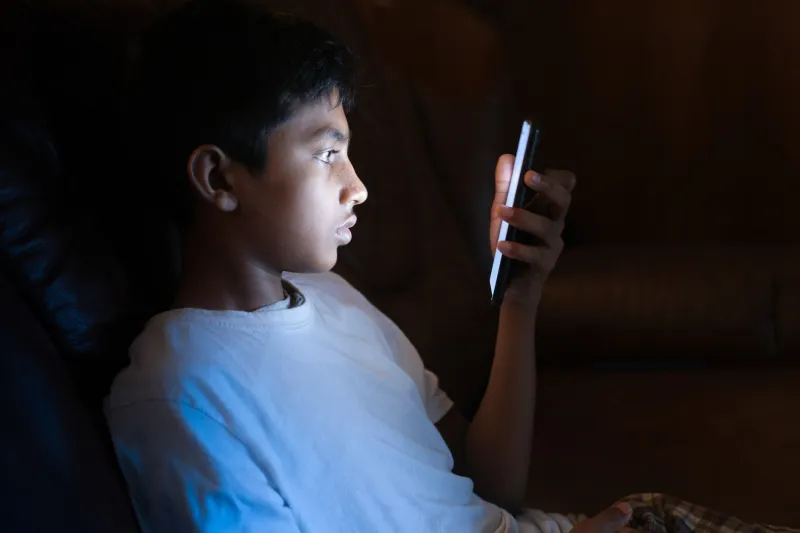
You know that feeling when a creator posts a video and within the first thirty seconds you're already relaxed? Like your nervous system just... exhaled? Compare that to texting your actual best friend to hang out and feeling a low-grade anxiety about how the night might go. Something is off about that equation. And yet, more people than ever are living inside it.
This isn't about loneliness in the simple, obvious sense. It's about something stranger — a growing preference for relationships that only move in one direction, because one direction feels a whole lot safer than two.
When Manufactured Feels More Honest
Here's the paradox sitting at the center of all this: the most carefully constructed version of a person — edited, lit, scripted, optimized — somehow reads as more authentic than the unfiltered human being who shows up late to brunch and says something thoughtless.
Psychologists have a concept called the mere exposure effect — basically, the more you encounter something, the more you trust it. Parasocial relationships exploit this in a way that real friendships simply can't replicate. A creator shows up in your feed daily, speaks in a tone calibrated to feel intimate, and over months and years, your brain logs that consistency as reliability. Your college roommate, by contrast, goes through phases. Gets weird after a breakup. Cancels plans. Exists outside the frame.
Real people are unpredictable. And unpredictability, it turns out, is emotionally expensive.
The Risk Calculus of Connection
Think about what it actually costs to be close to someone in real life. You have to show up when you don't feel like it. You have to absorb their bad moods without taking them personally. You have to be seen on days when you don't feel like being seen. The emotional ledger is always running, always slightly unbalanced.
A parasocial relationship has none of that overhead. You can step away whenever you need to. You can come back without explanation. The creator doesn't know you're gone, so there's no guilt, no awkward re-entry, no conversation about where things went. The relationship exists entirely on your terms, which means it can never disappoint you the way a real one can.
That's not a feature. That's the whole product.
And in a country where something like 61% of Americans reported feeling lonely before the pandemic reshuffled everyone's social lives, that product found an enormous, hungry market.
The Uncanny Valley, But Make It Emotional
The term "uncanny valley" usually describes the eerie discomfort of near-human robots — close enough to feel familiar, just off enough to feel wrong. There's a version of that happening emotionally with parasocial bonds, but the valley runs in the opposite direction.
The online relationship feels too right. Too consistent. Too perfectly calibrated to your preferences. Your algorithm has watched you long enough to know exactly which creator voice soothes you, which format holds your attention, which emotional register makes you feel understood. The result is something that mimics deep connection with an accuracy that real relationships — chaotic, reciprocal, demanding — almost never achieve.
And once you've gotten used to that precision, the messiness of actual human friendship can start to feel like a downgrade. Not because real connection is lesser, but because it's harder, and the brain is very good at avoiding hard things when easier alternatives exist.
What We're Actually Protecting Ourselves From
There's a version of this conversation that pathologizes the audience — that frames parasocial attachment as a failure of social development, a symptom of something broken. That framing is both lazy and wrong.
What's actually happening is that a lot of Americans have been hurt by real relationships in ways they haven't fully processed. Friendships that faded without explanation. Families that required emotional contortion to stay close to. Romantic partners who made intimacy feel dangerous. When connection has consistently cost more than it gave, pulling back toward lower-risk versions of it isn't pathological — it's adaptive.
Parasocial relationships offer a rehearsal space. A way to practice the feeling of closeness without full exposure. For some people, that's a bridge back toward real connection. For others, it quietly becomes the destination.
The trouble is that no one announces which one is happening.
The Comfort of a Story You Know
Part of what makes a favorite creator feel like a friend is narrative continuity. You've watched them move through phases — a bad year, a glow-up, a pivot in their content. You've tracked their growth the way you'd track a character across seasons of a show you love. That arc creates the sensation of shared history, even when the history only runs one way.
Real friendships have that too, obviously. But real friends also change in directions you didn't agree to, develop interests you don't share, become people you have to actively re-learn. The creator's evolution happens inside a frame you can opt out of at any time. You can skip the episodes you don't like.
You can't skip the episodes of a real person's life.
The Question Nobody Wants to Sit With
If a relationship makes you feel connected, seen, and emotionally sustained — does it matter that the other person doesn't know you exist?
Most people would say yes, of course it matters. But behavior tells a different story. People are spending more emotional energy on one-sided digital bonds than on the reciprocal relationships in their immediate lives, and they're often more protective of those bonds when challenged.
That defensiveness is worth paying attention to. It usually means the relationship is doing real emotional work — filling a genuine gap that something else left open.
The unsettling part isn't that parasocial relationships feel good. It's that they've gotten so good at feeling good that they're changing the baseline for what we expect from human connection. When the curated version keeps outperforming the real one, eventually you stop reaching for the real one as often.
And at some point, the stranger on your screen stops being a substitute.
They become the standard.