You Know Their Dog's Name but Not Their Soul: The Strange Emptiness of Creator Hyper-Familiarity
There's a specific kind of vertigo that hits when you realize you know more about a stranger's morning routine than you do about your own coworker's last name. You know the creator wakes up at 6:47 — not 6:45, they made a point of that. You know the dog's name is Pretzel, that they take their coffee with exactly one pump of vanilla, and that they cry every time they rewatch Interstellar. You've absorbed all of it. And yet, somewhere in the accumulation of all that intimate detail, the actual human being has gone completely blurry.
That's not connection. That's something else entirely.
The Intimacy Illusion
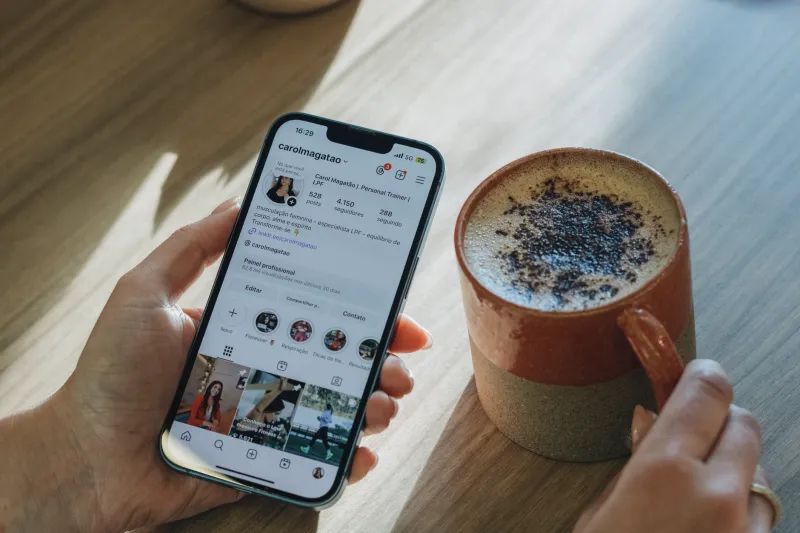
Creator culture figured out something quietly brilliant a while back: the more granular the personal detail, the stronger the audience hook. Not because depth creates closeness — but because specificity mimics it. Knowing someone's coffee order feels intimate. It's the kind of thing a best friend knows. So when a creator drops that detail into a morning vlog or a casual Instagram Story, your brain files it in the same mental folder where it keeps information about people you actually care about.
Psychologists have a term for the one-sided emotional bond that forms between audiences and public figures: parasocial relationships. We've known about these since the 1950s, when researchers Donald Horton and Richard Wohl first described the phenomenon in the context of early television. But the current creator economy has turbocharged the dynamic in ways that even recent research is struggling to keep up with. The sheer volume of micro-personal content — the morning routines, the 'get ready with me' videos, the late-night 'can't sleep, let's talk' Lives — has manufactured a kind of synthetic friendship that feels uncomfortably convincing.
And here's where it gets strange: the more convincing it feels, the more unsettling it becomes.
When More Information Means Less Understanding
There's a threshold somewhere in the data dump of creator micro-content where familiarity stops building connection and starts building a wall. Think about the people you're actually closest to in your life. You probably don't know everything about them. There are gaps, mysteries, contradictions you've learned to hold. That ambiguity is part of what makes them feel real and fully human.
Creator content, by contrast, tends to fill every gap. There's always another detail, another layer of 'authenticity,' another piece of behind-the-scenes access designed to make you feel like you're in the inner circle. But the inner circle never actually opens up. You're watching a highly curated performance of closeness — and somewhere, your brain knows it, even if it can't quite articulate the discomfort.
This is what you might call the Parasocial Uncanny Valley. In robotics and animation, the uncanny valley describes the unsettling dip in human comfort that happens when something looks almost human but not quite right. The same principle seems to apply here. When a creator relationship feels almost like a real friendship but lacks the actual reciprocity, the mutual risk, the genuine messiness of real human connection, something in us recoils slightly. We're drawn in, but we're also quietly disturbed.
The Snack Revelation That Changed Nothing
Let's get specific, because this is where it gets weird in a very American, very 2024 kind of way. Creators in the US have built massive audiences on the back of hyper-specific preference content. Favorite Trader Joe's snacks. Exact Sephora cart. The specific brand of Stanley cup, the precise color, where they got it. This stuff performs. Engagement numbers go up. Comments fill with 'omg same' and 'I just ordered this.'
But notice what's actually being shared. It's consumer preference, not character. It's taste, not depth. You now know that a creator prefers a specific flavor of sparkling water, and that information lives in your brain next to memories of conversations with actual friends — except it arrived with zero vulnerability, zero risk, and zero genuine exchange. It's the emotional calorie content of junk food: it feels like something, but it doesn't actually feed you.
And audiences are starting to notice the hangover.
The Growing Discomfort Nobody's Naming Out Loud
There's a quiet but real shift happening in how some people are relating to their favorite creators, and it doesn't get talked about much because it's hard to articulate without sounding ungrateful or weird. It's a creeping sense that knowing all this stuff about someone — someone who doesn't know you exist — has become a little bit embarrassing. Not in a moral sense, but in a this-is-making-me-feel-strange sense.
Some people describe it as suddenly feeling like they've been reading someone's diary without permission, even though the creator handed them the diary and asked them to read it. Others describe a sudden flatness when they meet a creator in person at a meet-and-greet and the creator has, obviously, no idea who they are. All that accumulated intimacy, all those morning routines and snack preferences and emotional check-ins — and the exchange was entirely one-directional the whole time.
The knowledge didn't build a bridge. It built a detailed map of a place you're not actually allowed to go.
What We're Actually Hungry For
None of this is to say creators are doing something sinister. Most of them are just doing what works, what the platform rewards, what audiences have historically responded to. The system incentivizes hyper-personal content, so hyper-personal content gets made. That's not a conspiracy; it's just how the attention economy runs.
But it does raise a question worth sitting with: if the micro-details of someone's life can feel so intimate while leaving us feeling so empty, what are we actually looking for when we consume this stuff? Probably the same thing humans have always wanted from storytelling and art — something that reflects our own inner experience back to us, that makes us feel less alone in a way that doesn't evaporate the second we close the app.
The irony is that the creators who tend to generate the most lasting connection aren't usually the ones sharing their grocery hauls. They're the ones making work — art, essays, videos, music — that reaches past the surface and touches something harder to name. The stuff that doesn't tell you what someone's dog is called, but somehow makes you feel like you understand the person anyway.
That's the gap between familiarity and intimacy. One is a list of facts. The other is something you can't quite manufacture, no matter how many morning routines you film.
And maybe that's the thing audiences are slowly, uncomfortably starting to feel — that all this knowing has left them no closer to understanding. Just more full of information they didn't ask for, about a person they'll never actually meet.