When Relatable Becomes a Warning Sign: The Eerie New Suspicion Around 'Real' Creators
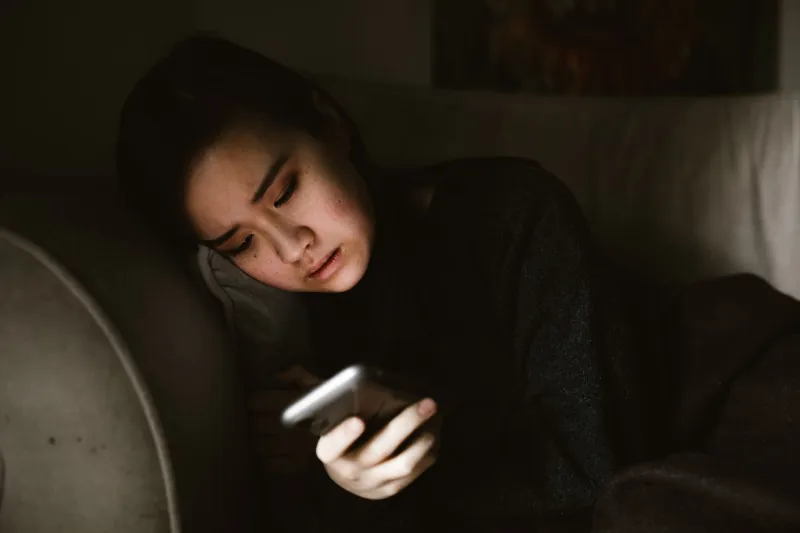
There's a specific kind of discomfort that's spreading across comment sections, group chats, and Reddit threads right now. It doesn't have a clean name yet. It's that crawling unease you feel when a creator posts a tearful confession that hits every emotional note perfectly — the right lighting, the right pause, the right amount of smudged mascara. You watch it. You feel something. And then, almost immediately, you feel suspicious of what you just felt.
Welcome to the parasocial uncanny valley. Population: all of us, apparently.
The Trap Hidden Inside 'Being Real'
For years, the internet rewarded vulnerability. Get personal, get messy, let people in — that was the formula. Audiences responded to creators who showed the cracks in their lives because it felt like a reprieve from the glossy unreality of traditional celebrity culture. The rough edges were the point.
But something has quietly flipped. The rough edges got studied. They got packaged. And now a growing number of viewers are picking up on the difference between a genuine stumble and a choreographed fall.
The psychological phenomenon at play here borrows from the concept of the uncanny valley — that unsettling dip in human comfort that happens when something looks almost human but not quite. Roboticists and animators know it well. What's newer is watching it apply to real people performing realness. When a creator's vulnerability is too well-timed, too emotionally legible, too perfectly imperfect, the brain starts sending quiet distress signals. Something is off. You can't always say what. But you feel it.
Why Polished Vulnerability Now Reads as a Red Flag
Part of what's driving this shift is sheer exposure. American audiences have now consumed enough creator content — across YouTube, TikTok, Instagram, Twitch — that they've essentially developed pattern recognition for the emotional beats of a staged breakdown versus an actual one. They've seen the tropes so many times that the tropes themselves have become suspicious.
The crying video. The 'I need to be honest with you' intro. The strategic pause before the hard admission. The camera slightly too close, the lighting slightly too warm. These were once markers of intimacy. Now they're starting to read as a checklist.
And creators know this. Which is where it gets genuinely strange: some are now manufacturing imperfection so carefully that even that has become a recognizable move. The accidentally unflattering angle that's actually very flattering. The 'unfiltered' post that went through three drafts. The 'I almost didn't post this' caption on something that was clearly always going to be posted.
At some point, the performance of not-performing becomes its own performance. And audiences are starting to clock it faster than ever.
The Paradox of the Messy Truth
Here's the strange part: people don't necessarily want creators to be polished. They want them to be genuinely unpredictable. There's a reason certain accounts blow up not because they're strategically vulnerable but because they're actually weird, actually inconsistent, actually hard to read.
The creators who are winning trust right now aren't the ones with the most emotionally resonant confessionals. They're often the ones who say something unexpected, contradict themselves without explanation, post something that doesn't quite fit their brand, or simply refuse to perform catharsis on cue. The messiness that works is the messiness that doesn't seem to be working for anything.
That's the paradox. Authentic imperfection is, by definition, not optimized. The moment it starts serving a purpose — growing a following, recovering from a scandal, rebranding after backlash — it stops feeling real. Audiences have absorbed enough media literacy to sense when emotion is being deployed rather than expressed.
What This Means for the People Watching
This isn't just a creator problem. It's also doing something to audiences themselves — something worth sitting with.
Developing a radar for manufactured authenticity sounds like a good thing. Critical thinking, media literacy, all that. But there's a shadow side. When suspicion becomes the default, genuine moments start getting caught in the same net. Real grief gets second-guessed. Actual apologies get dissected for strategic intent. People who are legitimately struggling get accused of content farming their own pain.
The audience's protective instinct — built up over years of being emotionally manipulated by people with ring lights and monetization goals — can calcify into a kind of reflexive cynicism that makes connection feel impossible. If everything looks like a play, you stop believing in anything that moves you.
That's a weird place to end up. And it's worth asking whether the creators who trained us to be this skeptical bear some responsibility for the world they've built.
The New Trust Hierarchy
So what does trust actually look like now, in this environment? Counterintuitively, it often looks boring. Or at least, it looks unoptimized.
The accounts that feel most trustworthy right now tend to share things that don't obviously serve them. They post at weird times, about weird things, without a clear narrative arc. They don't resolve neatly. They don't always circle back to the lesson. They sometimes just leave something out there and move on, without milking it for engagement.
There's also a growing appreciation for creators who set limits on their own disclosure — who don't share everything, who maintain some opacity, who don't give audiences the full emotional download every time something happens in their lives. The willingness to not perform vulnerability has started to read as more trustworthy than the willingness to perform it on demand.
Which is a strange reversal from where internet culture was even five years ago.
Something Shifted, and Nobody Announced It
That's the thing about this moment — it didn't come with a press release. No one declared that audiences were entering a new phase of parasocial suspicion. It just sort of happened, accumulating quietly in the comment sections and the group chats and the 'am I the only one getting a weird vibe from this?' posts.
But the shift is real. The emotional vocabulary of online connection is being rewritten, and the people who built careers on performing realness are navigating a landscape where the old moves no longer land the same way.
For audiences, the challenge is staying open without being naive. For creators, it's figuring out how to be genuine in a space that has learned to distrust the appearance of genuineness.
Neither of those is easy. And the uncanny valley between them is getting harder to cross.