Everyone's Watching Something. Nobody's Watching the Same Thing.
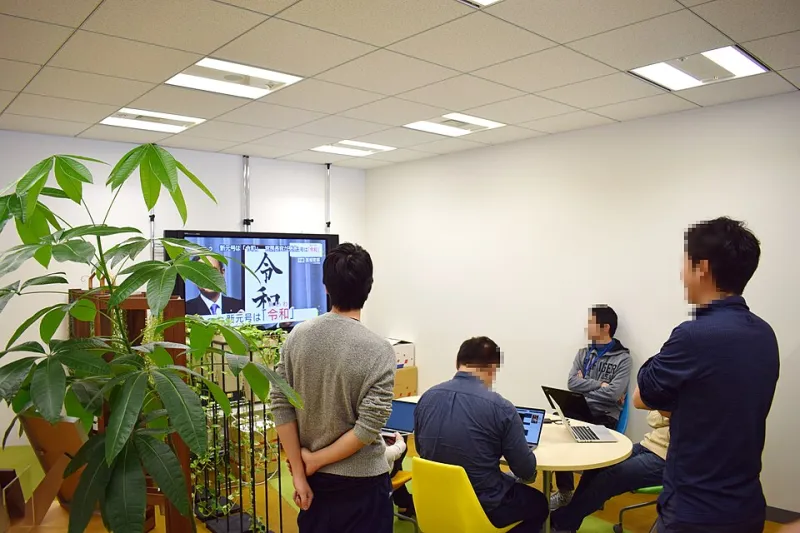
Photo: Syced, CC BY-SA 4.0, via Wikimedia Commons
I want to describe a very specific kind of loneliness, so stick with me.
You're at a dinner on a Saturday. Six people. Everyone there watches television. Everyone there pays for television — probably too much of it. And for fifteen minutes the conversation circles the table like a bird looking for somewhere to land, because six people have six different shows in their heads and none of them overlap.
Someone mentions a thriller on one service. Two people nod politely. Someone else brings up a comedy on another. A different two people nod. Then somebody says the thing that ends every modern cultural conversation: 'Oh, I've been meaning to start that.'
And that's it. That's the whole exchange. Six people who love TV, sitting in a room, with nothing to talk about.
The watercooler was an accident
For most of the last century, shared culture was a side effect of scarcity. Three networks. One prime-time schedule. A movie that played every theater in town, then showed up on cable, then showed up again on a Sunday afternoon. You didn't have to try to end up in front of the same thing as your coworkers. The pipes only carried so much.
The watercooler wasn't a cultural institution anyone designed. It was a plumbing problem that happened to produce jokes, arguments, and the mild social glue of knowing what everyone else was referencing.
We fixed the plumbing. Now there's an infinite number of pipes and each one runs directly to one person.
The algorithm runs the room
Here's the part that gets missed in the 'too much TV' complaint. It isn't volume that broke the shared text. It's precision.
Recommendation engines are extremely good now at building a private canon for every single user — and they're optimizing for the individual, not the dinner party. Your watchlist is a portrait of you at your most predictable. My watchlist is a portrait of me at mine. There is no structural reason for those two portraits to intersect, and increasingly they don't.
Add in the splintering of the platforms themselves and you get something close to cultural noise. A prestige drama on one service, a reality juggernaut on another, a sports package on a third, a niche comedy nobody can find because it's buried three menus deep. Every one of them is somebody's favorite show of the year. Almost none of them are two people's favorite show of the year.
Private watchlists, public silence
What fills the gap in real life is stranger than it sounds. People don't stop talking about culture — they just talk about it differently. They talk about it in a group chat of four people who all watch the same thing because they were carefully recruited into it. They talk about it in a Discord thread with strangers in three time zones. They talk about it in a Letterboxd review that functions as a diary entry with an audience of nobody in particular.
The conversation didn't die. It got privatized. It moved from the break room to the server, from the dinner party to the subreddit, from 'did you see it' to 'here's my take, delivered to the eleven people who already agree.'
That's not nothing. Some of those spaces are genuinely warm, genuinely funny, genuinely the best part of someone's week. But they don't do the thing the watercooler did, which was force you into contact with people who weren't already like you. Group chats are excellent at intimacy and terrible at friction.
What's actually filling the vacuum
Three things, as far as I can tell.
Live events. Sports, award shows, finales, a reality season built to be watched in real time. Anything that can only happen once has become the last reliable appointment. If you want a room full of people to have seen the same thing, you have to make it temporary.
The reaction economy. When nobody watches the same show, we start watching each other watch. That's a big part of why the internet is now oversupplied with commentary about media and undersupplied with people simply experiencing it.
The rerun as social currency. Comfort shows. Reruns. The stuff everyone has already seen a hundred times, which means it's the only material that functions as a shared language. It's a strange outcome: the most socially useful television in 2026 is television from 2011.
The optimistic case, if you want one
The hopeful read is that this is a transitional weirdness. Niche is not the enemy of culture — it's where a lot of the good stuff lives, and the fact that a teenager in Ohio and a retiree in Oregon can both find their exact thing is objectively an improvement over three networks deciding for everybody.
The less hopeful read is that we've traded a small number of shared texts for a large number of private ones, and we haven't replaced the thing shared texts actually did, which was give us a low-stakes reason to talk to people we didn't already know.
I don't have a solution. Nobody's going to un-invent the recommendation engine. But I do think it's worth naming, because the loss is quiet. There's no scandal, no cancellation, no villain. Just a table of six people on a Saturday night, all of them fans of something, all of them with nothing to say.
Someone, eventually, will change the subject.