Scrolling Into the Void: How Your Favorite Apps Figured Out You Were Lonely Before You Did

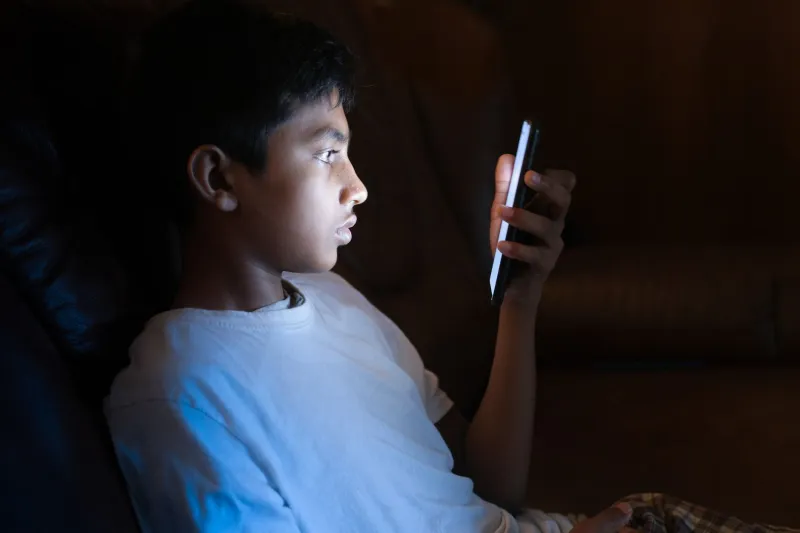
There's a specific kind of 3 a.m. scroll that most Americans know intimately. You're not looking for anything in particular. You're not bored, exactly. You're just... reaching. Reaching for something that feels like company without the mess of actual company. And the app — whatever app it is — meets you there, every single time, with eerie precision.
That's not an accident. That's architecture.
The Loneliness Signal You Never Sent
Here's the uncomfortable part: you don't have to tell a platform you're lonely. You don't have to type it, post about it, or even search for anything adjacent to it. The behavioral data you generate just by using the app tells a cleaner story than you ever would.
Researchers at places like MIT and Stanford have spent years mapping what loneliness looks like in user behavior. Longer session times. Erratic scrolling patterns — fast, then slow, then fast again. Rewatching the same content. Lingering on comment sections without posting. Clicking into creator profiles to read bios like you're trying to figure out if someone is a real person.
Platforms have access to all of that. And they've been training their models on it for over a decade.
The result is a recommendation engine that doesn't wait for you to express a need — it anticipates one. By the time you feel the pull toward your phone, the feed has already been rearranged to catch you.
Connection as a Retention Mechanism
Let's be direct about what's happening here: the emotion of connection — that warm, seen, understood feeling — is one of the most powerful retention tools ever discovered. It keeps users on platforms longer than outrage does, longer than novelty does, and way longer than pure entertainment does.
This is why recommendation systems evolved beyond 'you liked this, so here's more of this.' That's a content algorithm. What the major platforms built is a relationship algorithm. It's optimizing for a feeling, not a category.
When TikTok's For You Page serves you a creator who seems to articulate exactly what you've been feeling, that's not serendipity. That's a model that identified your emotional state through your consumption patterns and matched you with content engineered to trigger a recognition response. The creator didn't find you. The machine introduced you.
And the introduction is designed to feel like fate.
The Feedback Loop Nobody Asked For
Here's where it gets genuinely strange. The platform offers you simulated connection as a solution to loneliness. That simulated connection is satisfying enough to reduce the urgency of seeking real connection — just enough. Not completely. Just enough to keep you coming back.
This is what researchers sometimes call a 'partial reinforcement schedule,' and it's the same psychological mechanism that makes slot machines so effective. You get the feeling of connection sometimes. Not always. Sometimes the scroll is empty and hollow. But sometimes it hits, and that hit is vivid enough to keep you chasing it.
The loneliness doesn't go away. It gets managed. Modulated. Kept at a level that makes the app feel necessary without ever making it feel sufficient.
That's not a bug. That's the product.
What 'Knowing You' Actually Means
We've gotten comfortable with the idea that algorithms 'know us.' We say it casually, even fondly — the algorithm knows me so well. But it's worth sitting with what that actually means.
The algorithm doesn't know your history. It doesn't know what matters to you or why. It doesn't know your name in any meaningful sense. What it knows is your behavioral signature under specific emotional conditions. It knows what you reach for when you're isolated at midnight. It knows what kind of voice makes you feel less alone. It knows the content shape that keeps you watching past the point where you intended to stop.
That's a very specific kind of knowledge. And it's being used in a very specific direction: toward engagement, not toward your wellbeing.
The Notification That Knows When to Arrive
Push notifications are the clearest example of this. Every major platform has moved beyond time-based notifications — 'it's been three hours, come back' — into mood-predictive ones. The models have gotten good enough to identify windows of vulnerability: post-work slumps, late-night restlessness, Sunday afternoon emptiness.
The notification arrives during those windows with language calibrated to feel like someone thinking of you. 'People are talking about something you'd love.' 'Your friend just posted.' 'You haven't checked in a while.' It's designed to feel like an outstretched hand.
It is, technically, an outstretched hand. Just not from anyone who cares whether you're okay.
Is Awareness Even Enough?
Knowing all of this doesn't make you immune to it. That's the honest conclusion that most research on this topic lands on, and it's worth not glossing over. Understanding that a system is exploiting your loneliness doesn't stop loneliness from being exploitable. The biological need for connection is older than the internet by several hundred thousand years. The app is just very good at wearing the costume of that need.
What awareness does offer is a different relationship with the experience. The scroll feels different when you recognize it as a designed environment rather than a neutral one. The parasocial warmth feels different when you understand the mechanism behind it. You can still choose to be there. But you can choose it rather than fall into it.
That's a small thing. But in an architecture specifically designed to remove choice from the equation, small things matter.