Your Online Favorites Feel More Real Than Your Own Family. That's Not an Accident.

There's a specific kind of guilt that hits when you realize you know more about a YouTuber's morning routine than your best friend's current job situation. You know the creator's coffee order, their childhood trauma, the name of their therapist, the fight they had with their partner last spring. Your best friend? You haven't caught up in three weeks and the last text thread died in a pile of unsent "we should hang soon" messages.
This isn't a personal failing. It's a system working exactly as designed.
The Brain Doesn't Know the Difference
Here's the uncomfortable neurological truth: your brain processes parasocial relationships — the one-sided bonds you form with people who don't know you exist — using largely the same circuitry it uses for real ones. When a creator looks directly into a camera and says "I feel like I can tell you guys anything," your brain registers warmth, proximity, and trust. The fact that "you guys" means four hundred thousand people doesn't register emotionally. It registers personally.
Researchers studying parasocial interaction have found that regular exposure to someone's face, voice, and self-disclosure triggers genuine attachment responses. Oxytocin, the bonding hormone, doesn't wait around to verify that the relationship is mutual before showing up to the party. It just shows up.
This is already a lot. But creators — particularly the most successful ones — have learned to push on this with surgical precision.
Selective Vulnerability Is a Weapon
Authenticity online is almost never what it looks like. What reads as raw, unfiltered emotional honesty is typically a highly calibrated performance of just enough mess. A creator who cries on camera about a vague "really hard season" is giving you the feeling of intimacy without the liability of specifics. You fill in the blanks with your own experiences. Suddenly, their pain rhymes with your pain. You feel seen by someone who has never seen you.
This is what makes manufactured relatability so much more efficient than actual human connection. Real people in your life come with context, history, competing needs, and bad timing. They call when you're busy. They share things that don't land. They're inconsistent in ways that feel personal even when they aren't. A creator, by contrast, arrives on your schedule, at the exact moment you've chosen to engage, optimized to hold your attention from the first three seconds.
The people physically around you are competing with that. They're losing.
The Algorithm as Emotional Infrastructure
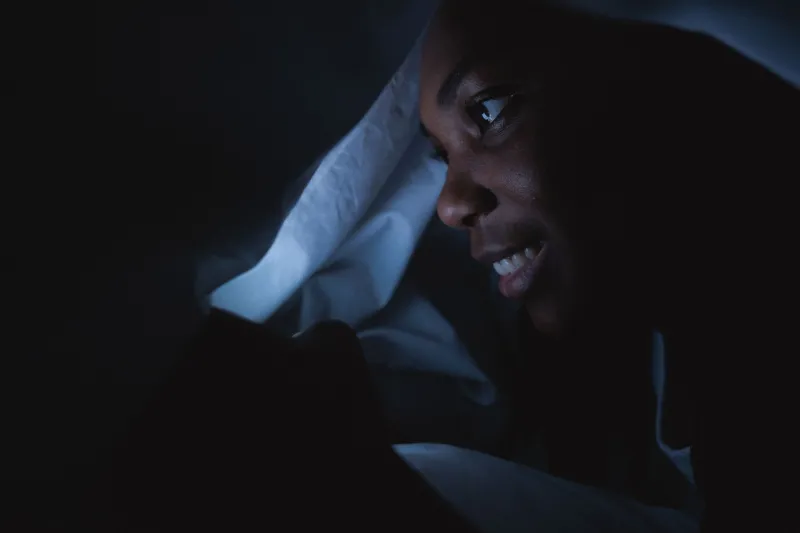
There's another layer here that rarely gets talked about: timing. Platforms like YouTube, TikTok, and Instagram don't just surface content — they surface it at moments when you're most susceptible to engagement. Late at night when you're scrolling because you can't sleep. During the ten-minute gap between tasks when your brain is half-checked out. Right after something stressful, when you're looking for something that feels comfortable and low-stakes.
Your creator is there for all of it. Consistently. Without fail.
Meanwhile, the people in your life are operating on their own timelines. Your mom calls at inconvenient moments. Your college friend only texts when they need something, or at least it feels that way lately. The emotional availability you're getting from a curated feed is, in a functional sense, more reliable than what most real relationships can offer. Not deeper. Not realer. But more present in a way that registers the same.
This is the parasocial uncanny valley: the eerie zone where a digital relationship starts to feel more textured, more consistent, and more emotionally available than the physical ones around you. It doesn't mean you've lost your grip on reality. It means the gap between what technology can simulate and what human relationships can sustain has quietly gotten very, very small.
Why Messy People Can't Compete
Actual human relationships are chaotic in ways that algorithms can't replicate — and that chaos is the point. A friend who's going through something hard might need more than they give for a while. A family member might say the wrong thing at the wrong time. These ruptures and repairs are how trust actually gets built. But they're exhausting in ways that a thirty-minute video essay is not.
Creators have figured out how to deliver the emotional highlights of intimacy — the confession, the laugh, the shared frustration, the moment of connection — without the maintenance costs. You don't have to show up for them. You don't have to remember their stuff. You don't have to be good at it. You just consume.
And the thing is, that feels like a relationship. The warmth is real. The sense of knowing someone is real. The comfort is real. What's missing is mutuality — the part where the other person is also, in some way, changed by knowing you.
The Flip Side Nobody Wants to Talk About
Here's where it gets genuinely strange: some people are now bringing parasocial relationship skills back into their offline lives and finding them inadequate. When you're used to engaging with a persona that's been engineered to be maximally compelling, the average person — with their weird opinions and their distracted eye contact and their tendency to change the subject at the wrong moment — starts to feel like a bad download.
That's not a metaphor. That's a documented shift in social expectation. Researchers studying Gen Z social behavior have flagged a growing discomfort with the unpredictability of in-person interaction among heavy social media users. The bar for what makes a conversation "worth it" has been quietly raised by content that's been produced, edited, and optimized to feel effortless.
Real people can't be edited. That's becoming a problem.
What You Do With This
None of this is an argument for logging off forever or throwing your phone into the ocean, though no judgment if you're considering it. It's more of an invitation to notice what's happening. To register the next time a creator's weekly upload feels more anticipated than a friend's visit. To ask what that gap is actually about — not with shame, but with curiosity.
The platforms aren't going to fix this. The incentives run entirely the other direction. If anything, the tools for manufacturing intimacy at scale are getting sharper, faster, and harder to distinguish from the real thing.
The relationships in your life are probably messier than your feed. They're also probably the ones that know your name.