Closer Than Comfortable: The Creeping Weirdness of Celebrities Who Feel Like They Know You
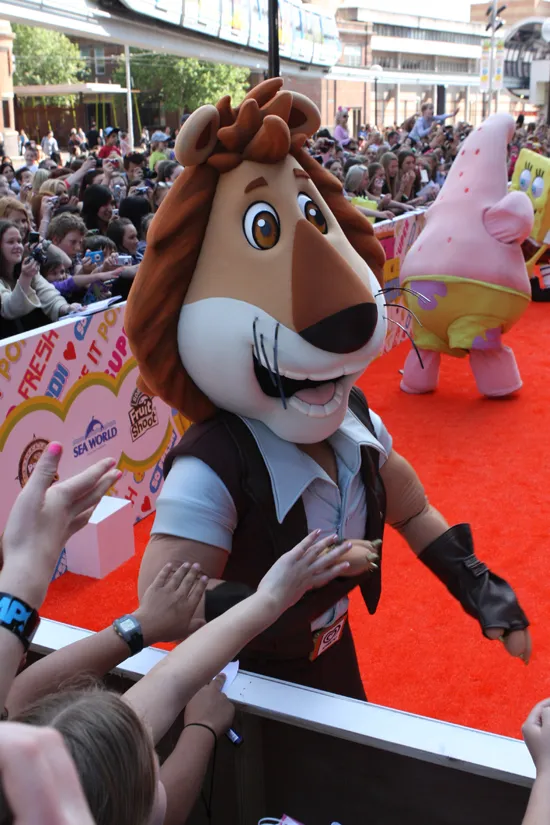
Photo: Eva Rinaldi, CC BY-SA 2.0, via Wikimedia Commons
There's a moment — you've probably had it — where a celebrity's social post lands so precisely on your specific mood, your specific reference, your specific inside-joke corner of the internet, that you stop scrolling for a second. How did they know? It feels warm for about three seconds. Then it feels weird. Then you close the app and stare at the ceiling.
That feeling has a name now, roughly: the parasocial uncanny valley. And it's one of the stranger side effects of living through an era where entertainment technology has gotten very, very good at manufacturing intimacy.
The Illusion of Being Seen
Parasocial relationships — the one-sided emotional bonds fans form with public figures — are nothing new. Teenagers have been taping posters to bedroom walls since posters existed. What's changed is the precision. Algorithms now know your watch history, your skip patterns, what time of night you doom-scroll, which fan edits you rewatched three times. That data gets fed back into how celebrities and their teams communicate with audiences, creating interactions that feel eerily tailored.
Taylor Swift has been the most-studied case in recent years. Her team's ability to acknowledge hyper-specific fan theories, drop Easter eggs calibrated to different corners of her fanbase, and make individual followers feel chosen is practically an art form. Most Swifties will tell you it feels magical. A smaller, quieter group will admit it sometimes feels like being profiled.
The difference between those two reactions might just be how much you've thought about the machinery underneath.
When AI Enters the Chat
The machinery got a serious upgrade. AI-generated celebrity content — voice clones, deepfake video messages, algorithmically written "personal" notes — has quietly entered the fan experience ecosystem. Some of it is disclosed. A lot of it isn't.
Several fan engagement platforms now offer what they market as "direct" celebrity interactions: voice messages, personalized video shoutouts, text-style conversations. The celebrity records some base material; the AI does the rest. The fan receives something that sounds like their name said by their favorite artist in a tone that somehow acknowledges their city and their recent activity.
For a lot of people, that's a product they'll pay for. Cameo built an entire business model on the human version of this. The AI version is cheaper, scalable, and significantly harder to distinguish from the real thing.
Here's where the uncanny valley kicks in. The original uncanny valley concept — coined by roboticist Masahiro Mori — described the discomfort humans feel when a robot looks almost human but not quite. The effect applies here, but it's emotional rather than visual. An interaction that's almost genuine triggers something in us that a clearly fake interaction doesn't. We're wired to detect inauthenticity in human connection. When the simulation is good enough to trip our sensors but not good enough to pass completely, the result is a specific, low-grade dread.
The Surveillance Flip
There's a structural problem lurking under all of this that doesn't get talked about enough: the data exchange is wildly asymmetrical.
The fan gives up enormous amounts of behavioral information — sometimes consciously, often not. The celebrity (or their AI proxy) uses that information to craft an experience of closeness. But the fan has no real access to the celebrity's interiority. What they receive is a performance of knowing them, built from their own data, reflected back.
It's a hall of mirrors wearing a warm smile.
This is why some researchers in digital media studies have started describing hyper-personalized fan experiences not as connection but as surveillance theater. The feeling of being known is real. The knowing itself is algorithmic. And the more seamless the technology gets, the harder it becomes to tell which is which.
Britney Spears' conservatorship era sparked genuine public conversation about the ways celebrity machinery can trap real people inside manufactured personas. The AI era raises the adjacent question: what happens when the manufactured persona is all there is, and nobody's trapped because nobody's real?
Why We Keep Opting In
None of this is stopping anyone. Fan engagement metrics are up. Parasocial attachment is arguably stronger than it's ever been. The discomfort, when it surfaces, tends to get rationalized away pretty quickly — because the alternative is admitting that something you found meaningful might have been engineered.
That's a hard thing to sit with. Especially when the engineering is good.
Psychologists who study attachment point out that humans are remarkably flexible about the sources of emotional satisfaction. We bond with fictional characters. We grieve celebrities we never met. We form genuine communities around shared investment in people who don't know we exist. None of that is pathological. It's just human.
The problem isn't the parasocial relationship itself. It's the way platforms and entertainment companies have learned to exploit the architecture of that relationship — using our own emotional data as the raw material for products that feel like care but function like retention strategies.
Where the Line Used to Be
There was a time — not that long ago — when the line between fan and celebrity was maintained partly by distance. You could love an artist's work without any illusion that they knew you existed. That distance was protective. It kept the relationship honest about what it was.
That distance has been systematically dismantled. Not because celebrities got more accessible, but because the simulation of accessibility became a revenue stream.
What we're left with is something genuinely new: a form of entertainment consumption that activates our deepest social instincts — belonging, recognition, intimacy — without delivering the thing those instincts are actually designed to find. It's nutritionally empty connection, and we've built entire platform ecosystems around producing and consuming it at scale.
The ceiling-staring feeling after the eerily perfect post? That's your nervous system noticing the gap between what something felt like and what it was.
It's worth paying attention to.