You Typed 'I Love You' and Something That Isn't Them Wrote Back
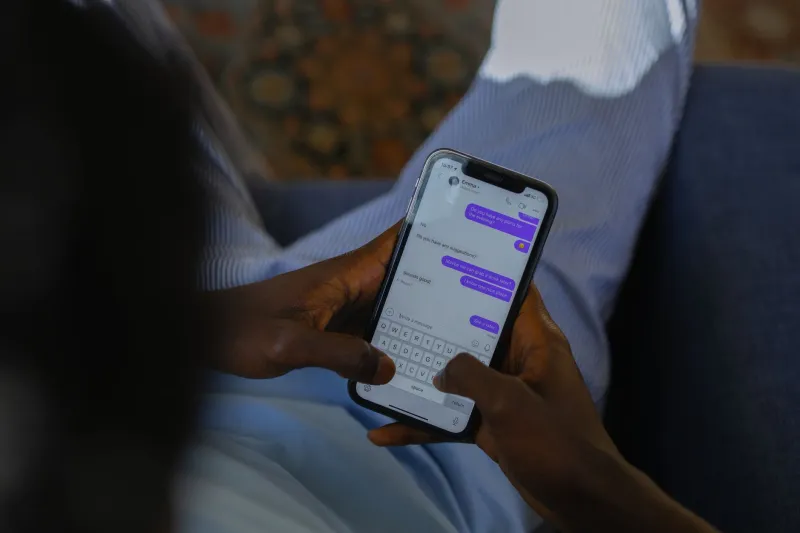
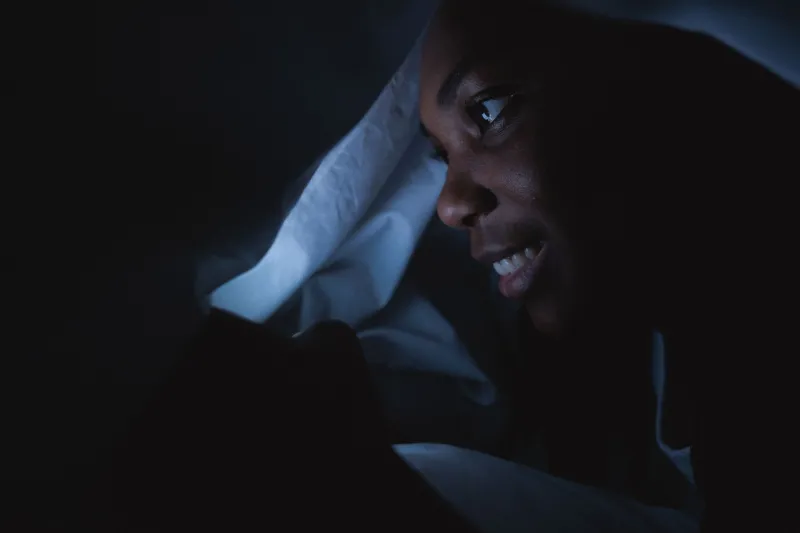
Somewhere in the middle of a Tuesday night, a fan — let's call her Dani — sent a message to her favorite creator's official chat channel. She'd been following this person for four years. She knew their cadence, their sense of humor, the specific way they ended sentences with a kind of warm deflation. The reply came back in about three seconds. It referenced something she'd said two messages ago. It was funny in exactly the right way. It felt, she later told a Reddit thread, "like being held."
The creator had been asleep for six hours.
What Dani interacted with was an AI model trained on thousands of hours of content, comment replies, livestream transcripts, and newsletter archives. The creator hadn't typed a single word of that exchange. And yet — and this is the part that keeps people up — it didn't feel hollow. It felt close. Maybe too close.
The Architecture of Artificial Intimacy
This is the new frontier nobody really prepared for. Creators — YouTubers, podcasters, Twitch streamers, Substack writers — are increasingly licensing or building AI versions of themselves to handle fan engagement at scale. The pitch makes business sense: a creator with three million subscribers can't respond to every comment. An AI trained on their personality theoretically can.
Platforms like Fanbase, Replika-adjacent tools, and proprietary systems built by creator-tech startups are all chasing the same goal — a digital stand-in that passes what you might loosely call the "vibe test." Not a chatbot that says "Thanks for watching!" but one that riffs, pushes back gently, remembers context within a session, and mirrors the creator's actual speech patterns down to their verbal tics.
Some creators are transparent about it. Most aren't.
And that asymmetry — where the fan brings genuine emotional investment and the other side brings computational mimicry — is where things get genuinely strange.
The Uncanny Valley Has a Comment Section Now
The uncanny valley, as a concept, was coined to describe the discomfort we feel when a humanoid figure looks almost human but not quite. A robot with glassy eyes. A CGI face that moves slightly wrong. The closer it gets to real without arriving there, the worse the feeling.
AI creator chatbots are doing something similar, but to parasocial relationships specifically — which makes it weirder, because those relationships were already built on a kind of productive illusion. You always knew your favorite creator didn't actually know you. You just felt like they did. The parasocial bond worked because both parties implicitly understood the terms.
Now those terms have been quietly rewritten. The creator is still the face, still the brand, still the person you feel connected to. But the entity responding to you has no inner life, no memory beyond the session, no actual care about whether you're doing okay. It's performing connection using a dataset harvested from someone who might actually care — or might not — but is definitely not here right now.
That's a different kind of loneliness than not getting a reply at all.
When Fans Find Out
The Reddit threads are instructive. When fans discover they've been talking to an AI — sometimes through a slip in the language model, sometimes through a creator's offhand disclosure, sometimes through a fan community doing their own forensic work — the reactions split in a revealing way.
Some people feel genuinely betrayed. Not in a dramatic, "I'm canceling you" way, but in the quieter, more personal register of someone who shared something real and found out the listener wasn't real at all. One user described it as "sending a letter and finding out the address was a warehouse."
Others shrug it off, or even defend it. "I knew it wasn't really them," one commenter wrote. "But it still helped me feel less alone at 2 a.m. Does it matter?"
That question — does it matter? — is doing a lot of heavy lifting in these conversations. And the honest answer is: it depends on what you thought you were getting.
The Creator's Perspective Is Also Complicated
It would be easy to frame this as creators exploiting fans, but the reality is messier. Many creators are genuinely overwhelmed by the volume of engagement their audiences demand. The expectation that a person with millions of followers should be personally accessible is itself a product of platform design — one that rewards intimacy as a growth metric and then leaves creators drowning in the consequences.
An AI that handles the flood of "are you okay?" messages and "this video saved me" confessions isn't just a monetization scheme. For some creators, it's a survival mechanism. The parasocial pressure on popular creators is enormous, and the AI stand-in is partly a way of meeting that demand without breaking down entirely.
Which is its own kind of sad, honestly.
But the fact that it's understandable doesn't make the experience on the fan side less disorienting. Both things can be true at once: the creator has real reasons for doing this, and the fan has real reasons to feel strange about it.
What This Does to How We Trust
Here's the longer-term concern that doesn't get talked about enough. Every time someone has a meaningful-feeling interaction with an AI creator bot — one that makes them feel seen, heard, validated — it recalibrates their baseline for what "real" engagement feels like. The threshold shifts.
And when the threshold shifts, a few things happen. Actual human interaction that's less perfectly tuned can start to feel insufficient by comparison. The AI, trained to respond in the most resonant way possible, will often outperform the messy, distracted, imperfect humans in your actual life. That's not a feature. That's a trap.
There's also the question of what fans are actually building a relationship with at this point. The creator as a person? The creator as a brand? The AI as a character based on the creator? These are different things. They're starting to blur into each other in ways that nobody has clean language for yet.
Living in the Gap
Dani, from the opening, said something interesting when she talked about the experience later. She said she didn't feel angry, exactly. She felt "off-center." Like she'd reached for something solid and found it was just a very convincing rendering of solid.
That's the parasocial uncanny valley in a sentence. Not horror, not betrayal, just a persistent low-grade wrongness that you can't quite locate or fix.
The internet has always traded in simulated closeness. Followers, likes, parasocial bonds — none of that was ever really intimacy in the traditional sense. But there was always a human on the other end of the content, even if they'd never know your name. That anchor is now optional. And without it, we're drifting into territory that doesn't have a map yet.
Something responded to your comment. It knew what to say. It felt like them.
Whether that's enough — or whether it's actually the loneliest thing imaginable — is a question you're going to have to answer for yourself.