When Your Weird Thing Goes Mainstream: The Slow Death of the Subcultures That Made Us
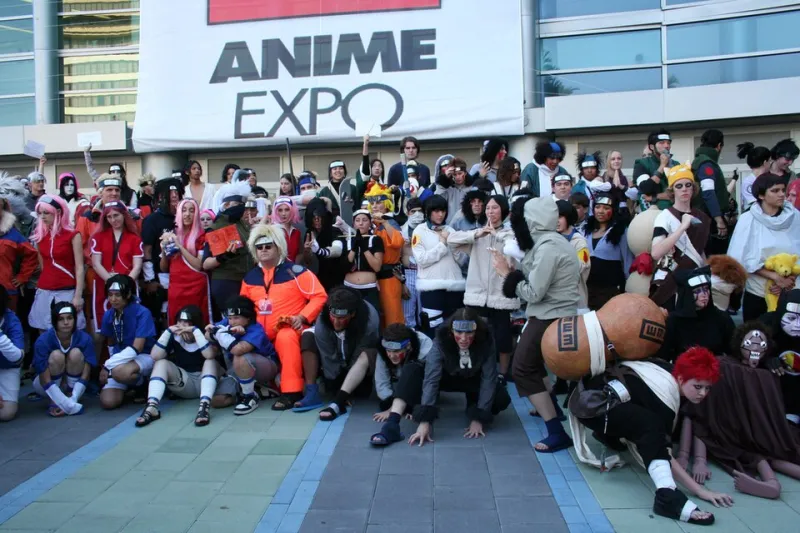
Photo: pinguino k from North Hollywood, USA, CC BY 2.0, via Wikimedia Commons
There's a moment every longtime anime fan can pinpoint — maybe it was when Demon Slayer broke box office records, or when Hot Topic started stocking Ghibli plushies next to the band tees, or when a coworker who'd never touched a manga in their life started confidently recommending Attack on Titan like they'd discovered it. The moment is different for everyone. The feeling is the same: something was yours, and now it belongs to everyone, and somehow that changes what it was.
This isn't a new phenomenon. Punk got commodified. Hip-hop got commodified. Skateboarding got an Olympic debut. But the speed at which it's happening now, and the precision with which corporate machinery identifies and absorbs niche communities, feels genuinely unprecedented.
The Pipeline Is Getting Shorter
Subcultures used to have longer incubation periods. A nerd fandom could exist in relative obscurity for years — developing its own language, its own hierarchies, its own inside jokes — before the mainstream even noticed it was there. That obscurity wasn't just incidental. It was functional. It created the conditions for genuine community-building, for the kind of slow cultural fermentation that produces something actually interesting.
The pipeline from underground to mainstream has compressed dramatically. Algorithm-driven platforms are extraordinarily efficient at identifying emerging cultural pockets and amplifying them before they've had time to fully form. A Discord server that was 200 people deep six months ago can have brand partnerships and a Reddit community of 400,000 by the time the original members have figured out what they're even building.
For indie game communities, this compression has been especially brutal. Games like Hollow Knight, Undertale, and Stardew Valley built devoted followings in spaces that felt intimate and self-contained. Then the streaming era hit, and suddenly the communities around those games were enormous, diverse, and largely populated by people who'd arrived through a YouTube algorithm rather than through any organic discovery. The original communities didn't disappear — they just got demographically swamped.
The Brand Strategist in the Room
Here's something the community members rarely see coming: the moment a subculture becomes legible to brand strategists is the moment its language gets borrowed without its meaning.
Brands have entire teams now dedicated to what's sometimes called "cultural fluency" — the ability to speak the vocabulary of niche communities convincingly enough to seem like participants rather than advertisers. The result is a kind of ventriloquism that longtime community members find deeply disorienting. Suddenly the phrases and references that felt like identity markers are appearing in ad copy, and the inside jokes that bonded a small group of weirdos are being used to sell energy drinks.
This isn't purely cynical on the brand side — there's genuine research and sometimes genuine appreciation involved. But the effect on the community is the same regardless of intent. The cultural artifacts that gave a subculture its texture get flattened into aesthetics, stripped of the context that made them meaningful.
What Anime Conventions Can Tell Us
Anime conventions are a useful case study because the transformation has been so visible and so rapid. In the early 2000s, these events were genuinely niche — small gatherings of deeply committed fans who'd had to work to find the content they loved, usually through fansubs and import stores and early internet forums. The shared labor of being a fan created a specific kind of bond.
Anime Expo in Los Angeles now draws over 100,000 attendees. That's not a niche gathering. That's a major entertainment industry event with corporate sponsorships, celebrity voice actor appearances, and merchandise lines designed by marketing departments. The fans are still there — many of them deeply passionate — but the context has shifted so completely that the event barely resembles what it was.
Longtime attendees describe a particular kind of alienation: being surrounded by more people who share their interest than ever before, while feeling more alone in that interest than they ever have. The community got bigger and somehow less communal.
Can Anything Survive Its Own Success?
The optimistic reading of all this is that mainstream absorption doesn't kill subcultures — it just forces them to evolve. When punk got commodified, the genuinely committed people went further underground and built something new. When indie games got absorbed into the streaming ecosystem, new communities formed around even more obscure titles. The underground always regenerates.
There's truth in that. But there's also something worth mourning in the original formation — the specific texture of a community that exists because people chose it actively, sought it out, invested in it before it was easy or socially rewarded to do so. That texture doesn't survive scaling.
What gets lost isn't the content itself. The anime is still good. The games are still good. What gets lost is the social meaning of loving them — the sense that your taste said something specific about you, that it connected you to a particular kind of person, that it was a marker of something real.
The Unknown Keeps Moving
Maybe the most honest thing to say is that the weirdness doesn't die — it just migrates. Every time a subculture gets absorbed, the people who were there for the weirdness itself rather than the content start looking for the next unknown territory. They're already out there building the next thing that will eventually get a Target aisle.
The grief is real. But so is the impulse that created the original community in the first place — the hunger for something that hasn't been smoothed out yet, something that still requires a little work to find. That hunger doesn't go away just because the mainstream learned how to monetize its last object.
It just picks up and moves somewhere you haven't heard of yet.