The Track That Changes When Your Pulse Does
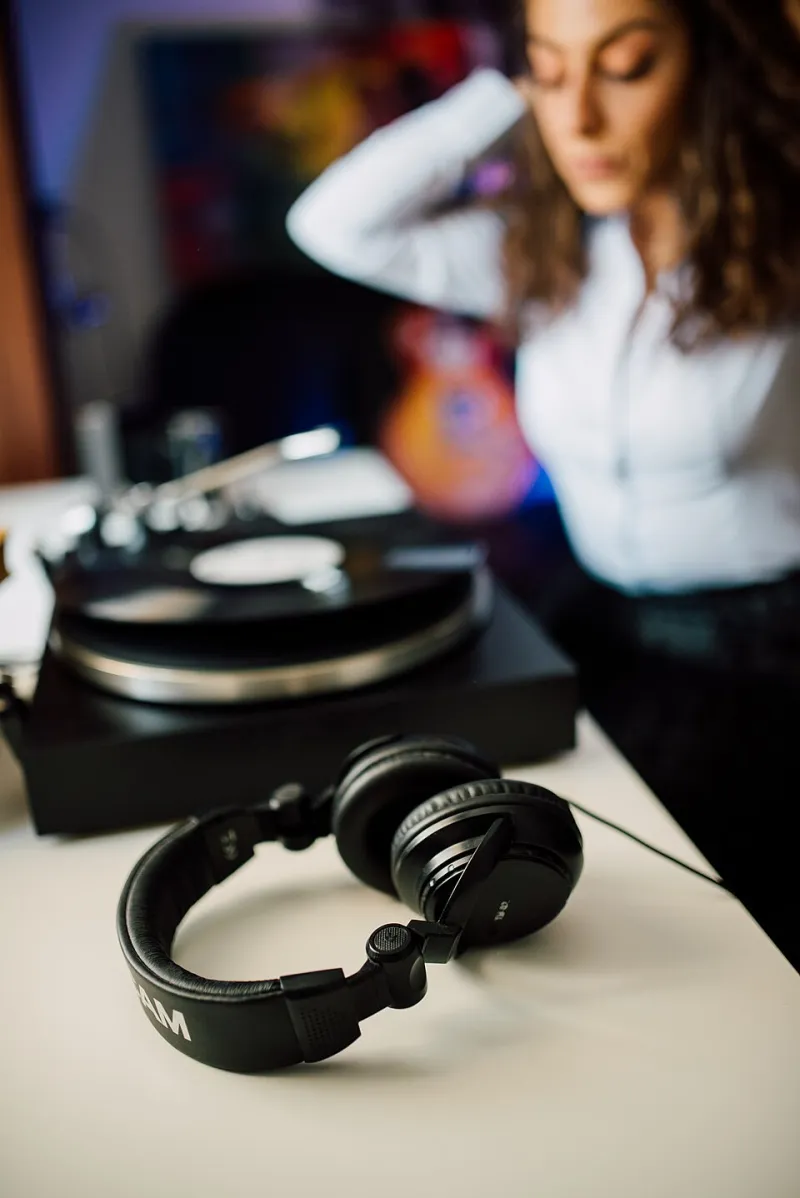
Photo: Shixart1985, CC BY 2.0, via Wikimedia Commons
There's a track that will play differently tomorrow. Not because it was remastered, but because you will be different — a slightly higher resting heart rate, a different room, four hours less sleep, a phone that knows you took the stairs. The music adapts. It has no choice. That's how it was built.
Adaptive audio isn't new. Video games have been doing it for decades: the strings swell when the enemy appears, the percussion drops out when you enter the cave. What's changed is that the technique has walked out of the game and into the rest of your life. Ambient apps generate soundscapes that breathe with your body. Generative playlists stretch and recombine in real time. Artists release "versions" that are more like systems than recordings — inputs in, an unrepeatable output out.
The Score Learned to Watch You
The mechanics are mundane once you look at them. A heart-rate reading from a watch or a ring. Time of day. Location. Motion from an accelerometer. Sometimes a self-reported mood check, which is the most revealing input of all, because it tells you exactly how much the system trusts you to know yourself.
Then the model builds layers: base texture, melody fragments, density, tempo, reverb length. The result can be startlingly effective. A commute track that opens up as you walk into daylight. A focus mix that thins out the moment your pulse climbs. Something quiet that appears at 11 p.m. without anyone selecting it, because the app noticed you've been quiet for three evenings running.
That last example is where the pleasant tingle turns into a slight chill. The music didn't respond to something you did. It responded to something you didn't do.
When the Soundtrack Arrives First
Traditional music is a document. Someone felt a thing, made a thing, and you meet it later with your own feelings in hand. There's a productive mismatch in that — the song says one thing, you bring another, and the friction is where meaning happens.
Adaptive music removes the mismatch. It's designed to fit so well there's nothing to press against. Which means the song is not longer a document of someone else's inner life. It's an instrument reading yours back to you, tuned to keep you in whatever state you've already arrived in.
Sit with that for a second. The most personalized soundtrack ever built is also the one least likely to change your mind.
The Version of You That Hasn't Shown Up
Here's the genuinely eerie part, and it's not surveillance. It's forecasting.
The next generation of these systems doesn't just respond to your current state — it predicts where you're heading. A run's final mile, a wind-down before sleep, a mood that's been sliding since Tuesday. The music starts pre-adapting. It scores a self that is about to exist.
In theory, that's beautiful: art anticipating the person you're becoming. In practice, it raises a question nobody's answered. If a song was written for the you of eleven minutes from now, and it works — did it accompany your feelings, or did it suggest them? When you remember this evening, will you remember how you felt, or the soundtrack that told you how you felt?
Memory is already a shaky archivist. Give it a generative score that was optimized for a predicted mood, and you've essentially outsourced the emotional coloring of your own life to a system tuned for retention.
Who Gets to Hold the Aux
There's an ownership question hiding underneath all this. A composed song belongs to its writer. An adaptive one belongs to whoever set the parameters — and those parameters are usually invisible.
The tempo floor. Which moods are allowed to be unresolved. Whether the system has a "sad" setting that actually lets you stay sad, or one that gently nudges you out of it after ninety seconds because engagement metrics say listeners bounce. That's not a musical decision. That's a philosophical one, coded by someone you'll never meet, shipped silently in an update.
Some artists are pushing back in interesting ways. Generative pieces that refuse to read biometrics, systems that deliberately inject wrongness — a sour note, a tempo hiccup, a silence that goes on too long. The idea being that friction is a feature of art, not a bug to be smoothed out by personalization.
What We're Actually Asking For
Maybe the appeal is simpler than any of this. We want the feeling of being understood, and music has always been the cheapest way to get it — one song, three minutes, someone else's words doing your work for you.
Adaptive audio just shortens the distance. No more scrolling for the right thing. The right thing finds you, adjusts to you, anticipates you. And that's a real luxury, in a decade when being met halfway feels rare.
The cost is the surprise. The album that was wrong for you in 2004 and became the album you needed in 2019 — that happened because nobody was tuning it. The song couldn't see you coming.
Which is the odd knot at the center of all this: the more perfectly a piece of music adapts to who you are right now, the less likely it is to be the thing that changes you next.